


江戸招木 は、現在準備中です。
アナタの推しを、日本独自の縁起物で応援してみませんか。
「招木」とは?
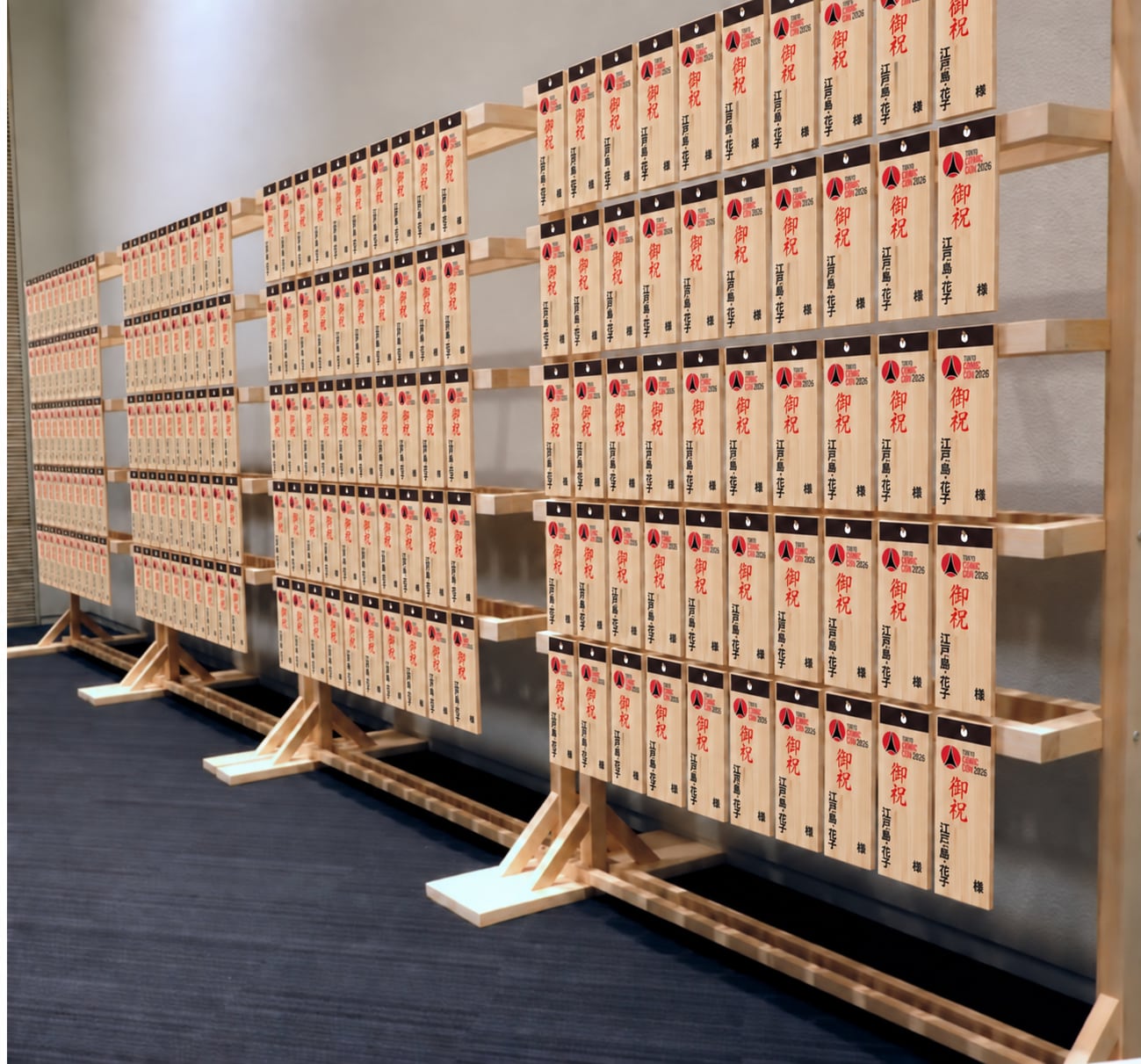
「招木」は「招き」の当て字で、お客様を招く縁起物です。その起源は江戸時代、宿場の旅籠や商家、茶屋の屋号、あるいは火消の組の名などを記した木札を、店先に掲げていたことにあるといわれています。馴染み客から贈られた木札が数多く並ぶことで「多くの人が集まる繁盛店」という目印となり、新しい客を呼び込む―すなわち福を招く―縁起物として、「招木(招喜)」と呼ばれるようになりました。
Why not show your support for your favorite star with a unique Japanese good-luck charm?
What is a "Maneki-gi"?
The term "Maneki-gi" (literally "inviting wood") is a play on the word *maneki* ("inviting") and refers to a lucky charm used to welcome customers. Its origins trace back to the Edo period, when inns, merchant shops, teahouses, and even firefighting brigades would hang wooden plaques displaying their names or logos at their storefronts. As these plaques—often gifts from loyal patrons—accumulated, they served as a sign that the establishment was a thriving business where many people gathered. Consequently, they came to be known as "Maneki-gi" (a name that can also be interpreted as "inviting happiness/good fortune")—lucky charms that attracted new customers and brought prosperity.